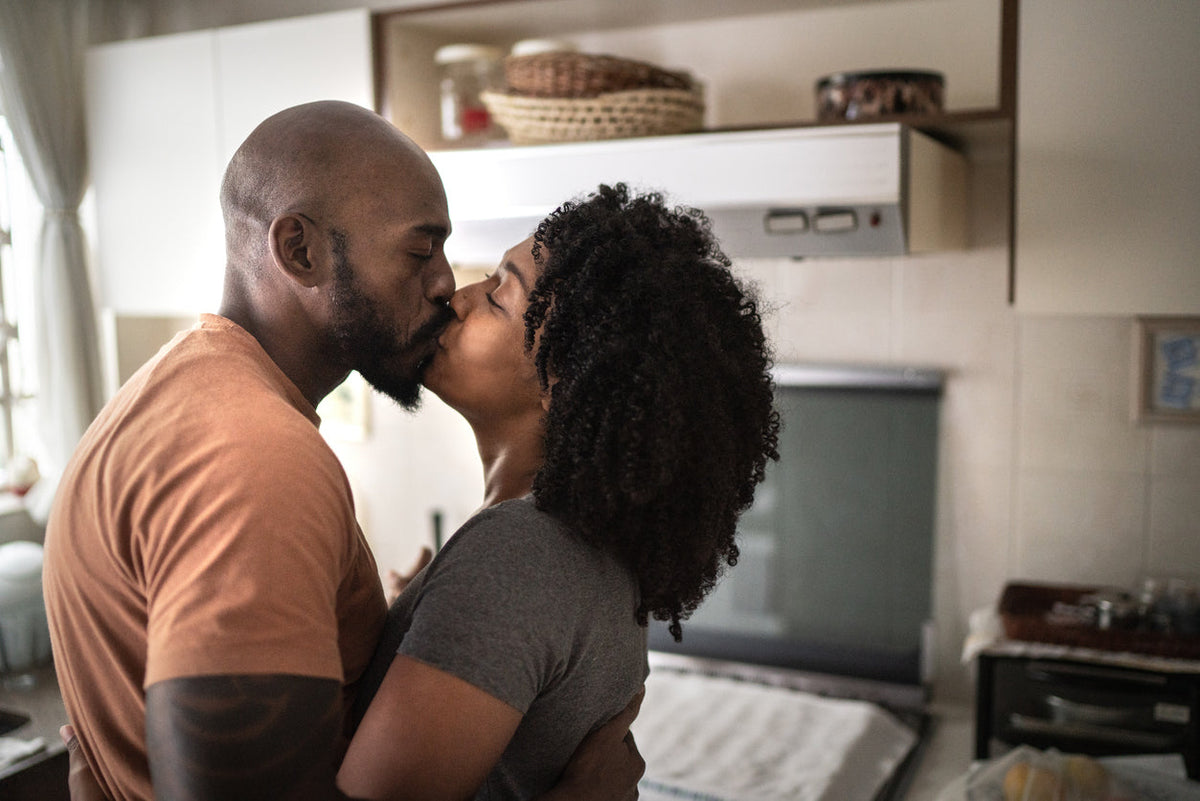
Search for “married sex”, and you’ll find no shortage of extremes — from horny escapades to dire warnings about disappearing desire to unrealistic advice that assumes intimacy should stay exactly the same forever. Real married sex lives somewhere in the middle. It evolves. It stretches. It sometimes stalls. And, with the right attention, it can become deeper, more connected, and more satisfying than it ever was at the beginning.
Marriage doesn’t end sex, but it does change the context around it. Careers, caregiving, stress, health, hormones, and long histories all enter the room. The question isn’t whether sex in marriage will change — it’s how couples adapt when it does.
And Stripes Advisory Board Member Cindy Meston, Ph.D, professor of clinical psychology and Director of the Sexual Psychophysiology Laboratory at the University of Texas at Austin, is here to help.
Sex in marriage is about more than the bedroom
One of the biggest myths about married sex is that desire should appear spontaneously, the way it might have early in a relationship. Research (and lived experience) tell a different story.
As Dr. Meston explains: “Remember, good sex isn’t just about the sex act itself. It starts at the beginning of the day with a hug, a kiss, a little surprise note tucked into a jacket pocket. It’s important to set the mood for love and intimacy the whole day – not just a few hours before sex.”
In long-term relationships, foreplay often begins well before anyone is undressed. Emotional closeness, feeling appreciated, and small gestures of care play an outsized role — especially for women’s sexual desire.
Dr. Meston emphasizes that kindness matters: “Pay compliments, show your appreciation for the things your partner does to please you, and inhibit criticism. Everyone wants to feel appreciated.”
In other words, sex in marriage is rarely just about sex. It’s about how partners treat each other in the ordinary moments that make up the day.
Why does married sex feel harder?
Many couples worry when frequency changes or desire feels less urgent. But long-term intimacy isn’t fueled by novelty alone. It’s shaped by trust, safety, and emotional bandwidth.
For women especially, stress, fatigue, body image concerns, and hormonal shifts (including perimenopause and menopause) can significantly affect desire and arousal. That doesn’t mean attraction is gone — it means the conditions for desire may need to change. Pro tip: consider adding a play oil to the equation.
Dr. Meston points out that cultural messaging does real damage here: “Media influences, including photo alterations of women’s bodies in magazines, have set unrealistic standards of beauty for women and have done a terrible disservice to women.”
In fact: “A recent study showed that as high as 88% of US women ages 25 to 74 years report being dissatisfied with their bodies.”
That dissatisfaction doesn’t stay confined to the mirror — it shows up in the bedroom.
Body confidence and sex in marriage
Body image anxiety is one of the quietest intimacy killers in long-term relationships.
Dr. Meston offers practical, compassionate advice: “Don’t compare yourself to super models — it’s highly unlikely your partner will have ever seen a live body that looks even remotely like what’s depicted in magazines.”
She also reminds women of a simple truth that often gets lost: “If you’ve had sex with your partner before and they were sexually aroused during sex with you then they are clearly attracted and turned-on by your body – focus on that and celebrate it.”
How sex in marriage often gets better with time
Despite the anxiety around married sex, many couples report greater satisfaction as relationships mature. Why? Less pressure. More honesty. Better communication. A clearer understanding of what feels good and what doesn’t.
Sex in marriage often shifts from performance to presence. From urgency to intention. From proving something to sharing something.
Dr. Meston sums it up succinctly: “In short, foreplay starts well before the sex act begins.”
That foreplay might look like teamwork, affection, laughter, or simply feeling seen by your partner.