Why Sexual Wellness Changes in Menopause, and Why We Should Be Talking About It
Let's talk about something that doesn't get nearly enough attention: what happens to your sex life during perimenopause and menopause.
Maybe you're still interested in sex, but your body doesn't seem to respond the way it used to. Maybe you're distracted before you even get started. Or maybe your desire has changed, and you're wondering whether that's just part of getting older.
Here's the thing: sexual wellness is about more than libido. It's also about how your body responds to touch, how you experience physical sensation, how comfortable you feel during intimacy, and whether your mind and body feel like they're on the same page.
And yes, all of that can change during midlife. Understanding why is the first step toward figuring out what feels right for you now.
How Perimenopause and Menopause Can Affect Sexual Wellness
During perimenopause, the transition leading up to menopause, hormone levels fluctuate. After menopause, estrogen levels remain lower than they were during the reproductive years. These changes can affect several aspects of sexual wellness.
Estrogen plays an important role in vaginal tissue health and natural lubrication. As estrogen levels decline, some women experience vaginal dryness, reduced elasticity, or discomfort during sex. Hormonal changes may also influence sexual responsiveness, although everyone's experience is different.
Testosterone is another hormone involved in sexual function, including desire. But hormones aren't the whole story. Research consistently points to a mix of biological, psychological, and relationship factors that shape women's sexual experiences during midlife.
Sleep disruptions, stress, changes in mood, body image, and the demands of everyday life can all influence how you feel about intimacy.
In other words, if your sexual wellness feels different lately, there's rarely just one explanation.
It's Not Just Libido: Desire and Arousal Are Different
We often use the words desire and arousal interchangeably, but they're not the same thing.
Sexual desire is the feeling of wanting sex. Mental arousal is the sense of being engaged, excited, or turned on. Physical arousal refers to the body's physiological response, including changes in genital blood flow and lubrication.
These experiences are connected, but they don't always happen together.
Stripes Advisory Board Member Cindy Meston, Ph.D, professor of clinical psychology and Director of the Sexual Psychophysiology Laboratory at the University of Texas at Austin, has studied the relationship between subjective arousal and the body's physical response.
Her research helps explain why a woman can feel mentally interested in sex without experiencing the physical response she expects. The reverse can happen, too: a physiological response doesn't necessarily mean someone feels desire.
Neither experience tells the whole story on its own.
The Mental Load Is Real, and It Can Follow You Into the Bedroom
Ever tried to relax when your mind is running through tomorrow's calendar, the grocery list, work deadlines, and the five things you forgot to do today? You're not exactly in the moment.
Dr. Meston's research highlights how much context matters to women's sexual arousal. Stress, body image, relationship dynamics, and even distracting thoughts can influence how engaged you feel during intimacy.
This isn't about needing a perfectly clean house or a completely stress-free life before you can enjoy sex. It's about recognizing that arousal doesn't happen in a vacuum.
Feeling connected to your partner, having time to unwind, and feeling comfortable in your body may all help create the conditions for intimacy. For some women, emotional connection becomes an especially important part of desire as they get older.
And if the things that used to work for you don't work quite the same way anymore, that doesn't mean pleasure is off the table.
As Dr. Meston explains in her educational video, the path to pleasure may change as our bodies change, but that doesn't mean the destination has to.
How to Support Your Sexual Wellness in Midlife
There isn't one universal solution, because sexual wellness has several moving parts. But there are practical places to start.
-
Talk about what's changed. If you're comfortable, talk with your partner about what feels good now, what doesn't, and what you'd like to explore.
-
Give yourself room to be present. A slower pace, less pressure, and time to connect can make intimacy feel more inviting.
-
Address physical discomfort. Vaginal moisturizers, lubricants, and medical treatments may help with dryness or pain, depending on the cause. A healthcare professional can help you understand your options.
-
Bring persistent changes to your healthcare provider. Pain, distressing changes in desire, or ongoing difficulty with arousal deserve attention, not a shrug and a reminder that you're getting older.
-
Think about sexual wellness as part of overall wellness. Sleep, mood, stress, relationships, and physical health can all play a role.
Meet Rite of Passion: A Daily Ritual for Sexual Wellness
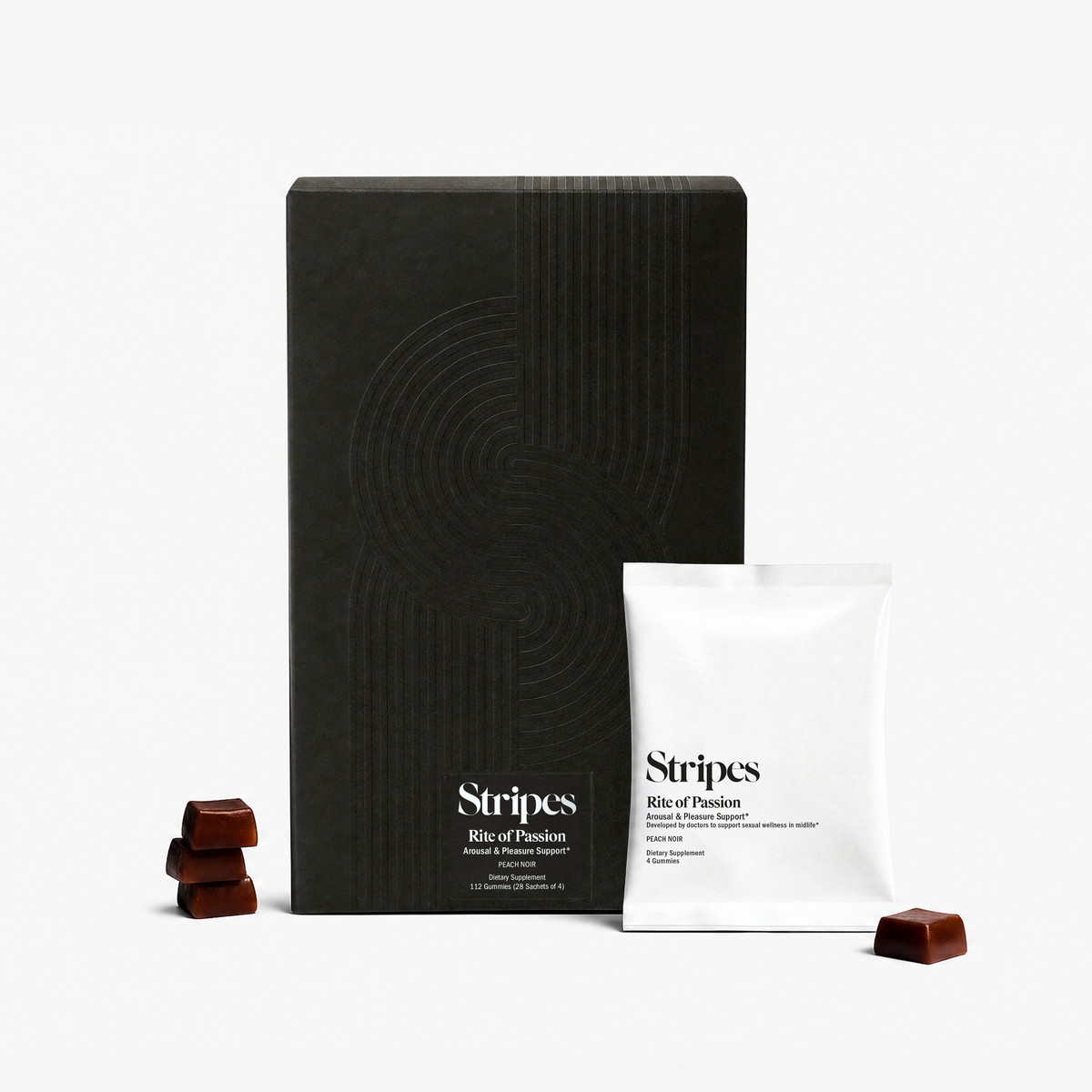
Sexual health deserves the same thoughtful attention as the other parts of your wellness routine. That's the idea behind Rite of Passion, Stripes Beauty's arousal and pleasure support gummy, created in partnership with Dr. Cindy Meston and Dr. Somi Javaid, a board-certified OB/GYN and women's sexual health expert.
Formulated to support sexual responsiveness, blood flow involved in physical arousal, mood, and cognitive clarity, Rite of Passion takes a multidimensional approach to sexual wellness in midlife.*
It isn't a quick fix or promise. It's about making room for a part of wellness that women have too often been told to overlook.
Because sexual wellness is wellness, and pleasure deserves a permanent place in your routine.
Frequently Asked Questions
Does menopause always reduce sexual desire?
No. Some women experience changes in desire during perimenopause and menopause, while others notice little change or even an increase. Hormones, physical comfort, mood, sleep, health, and relationships can all contribute.
Why am I interested in sex but not physically aroused?
Mental desire and physical arousal are related but distinct. Hormonal changes, reduced lubrication, medications, stress, and other factors may affect the body's response. If this is persistent or concerning, speak with a healthcare professional.
Can you improve sexual wellness after menopause?
Yes, there are options for addressing changes in sexual wellness, depending on what's contributing to them. These may include lubricants, vaginal moisturizers, medical treatments, counseling, communication with a partner, or other approaches tailored to your needs.
*These statements have not been evaluated by the Food and Drug Administration. This product is not intended to diagnose, treat, cure, or prevent any disease. This article is for informational purposes only and isn’t a substitute for professional medical advice.
Top Picks To Try Now